Blog · Template
A weekly meal planning checklist for a shared household
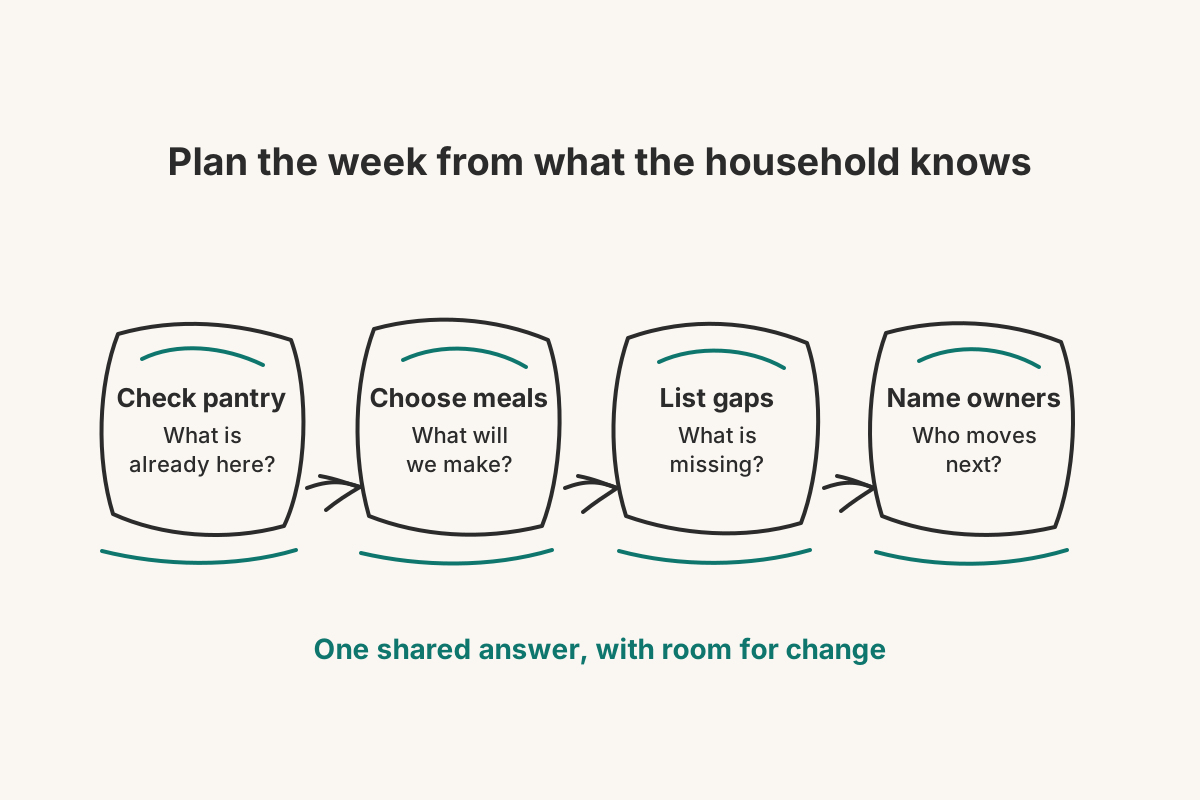
A weekly meal planning checklist should begin with what is already in the pantry, choose only the meals the household is likely to make, add the missing ingredients to one shopping list, and give shopping and cooking clear owners. Keep changes visible so the plan can bend without returning to one person's memory.

A weekly meal planning checklist should begin with what is already in the pantry, choose only the meals the household is likely to make, add the missing ingredients to one shopping list, and give shopping and cooking clear owners. Keep changes visible so the plan can bend without returning to one person's memory.
The goal is not a perfect menu. It is a shared answer to four ordinary questions: what do we have, what will we make, what is missing, and who is handling the next step? Fifteen calm minutes with those questions can replace several smaller conversations during the week.
What should you check before choosing meals?
Start with the food that should shape the week rather than with an empty calendar. Look through the pantry and the fresh ingredients already at home. Notice what is plentiful, what is nearly finished, and what should be used soon. This is an inventory pass, not a full count of every item.
Then check the week's real constraints. Which evenings have little time? When will several people eat together? Is someone away? Does the household have a low-capacity day when a simple meal would be more honest than a complicated plan? Record only the facts that change what is practical.
Use this short preparation list:
- ingredients that should be used first;
- dependable staples already available;
- evenings with a narrow cooking window;
- meals that need to cover more or fewer people;
- one flexible meal for a changed plan.
Sivella's kitchen keeps the pantry, meal planning, shopping list, and dinner suggestions together. That shared context lets the household choose from what is already there instead of planning in one place and checking supplies somewhere else.
How many meals should the household plan?
Plan the meals that would otherwise create a last-minute decision. For many households, that means dinners and perhaps one or two lunches. Leave breakfasts, leftovers, or familiar defaults alone when they already work without coordination.
Choose fewer named meals than there are open evenings. A plan with no spare room breaks the first time someone works late, an invitation appears, or leftovers last longer than expected. One flexible slot can absorb a change without turning the remaining ingredients into a second planning problem.
For each planned meal, write:
- Meal: a recognizable name, not a recipe transcript.
- Day or condition: Tuesday, after the late appointment, or the next evening everyone is home.
- Ingredients on hand: the useful starting point.
- Gaps: only what the household still needs.
- Owner: the person cooking or moving the immediate preparation step.
- Fallback: the simpler option if time or energy changes.
Sivella can suggest dinners from what the household already has. Treat a suggestion as a starting point. The household still chooses what fits its time, capacity, and preferences.
How do you turn the plan into one shopping list?
Read each meal once and move only its missing ingredients to the shopping list. Combine repeated items, then check the pantry again before adding something uncertain. This small pass prevents the plan and the list from becoming two versions of the same week.
Keep household staples separate from meal-specific gaps. A nearly empty everyday item may belong on the list even when no named meal uses it. A special ingredient belongs only if the household has actually chosen the meal that needs it.
Give the shop one immediate owner. Sivella tasks carry an owner, so responsibility for this trip or order can be visible without making that person the permanent household shopper. If a second person needs to confirm an item, make that confirmation its own small action rather than leaving the entire list waiting.
What should happen when the week changes?
Change the shared plan instead of privately carrying the exception. If Wednesday's meal moves to Thursday, check what that does to ingredients that need using, who expected to cook, and whether the fallback now belongs somewhere else. Update the few affected facts; do not rebuild the whole week.
Use one-off reminders only for timing that genuinely matters, such as moving something from the freezer or collecting an order. Sivella supports one-off nudges as well as recurring rhythms. The weekly planning session can recur, while a temporary preparation step should disappear when it is complete.
At the end of the week, keep the review brief. Which ingredient was repeatedly missed? Which meal required more capacity than the evening had? Did shopping, deciding, and cooking settle with one person even though the plan was visible? Adjust one part of the next checklist rather than adding more detail everywhere.
A shared meal plan is working when another household member can see what is intended, what is available, what needs buying, and what they own without asking for a private briefing. Dinner still takes work. The remembering and deciding no longer have to happen in one head.