Blog · Comparison
Sivella vs Ohai: two takes on the household assistant
Sivella gives everyone running the home one shared context for tasks, decisions, budget, kitchen and calendar availability. Named ownership turns an AI-organised plan into responsibility both adults can see and share.

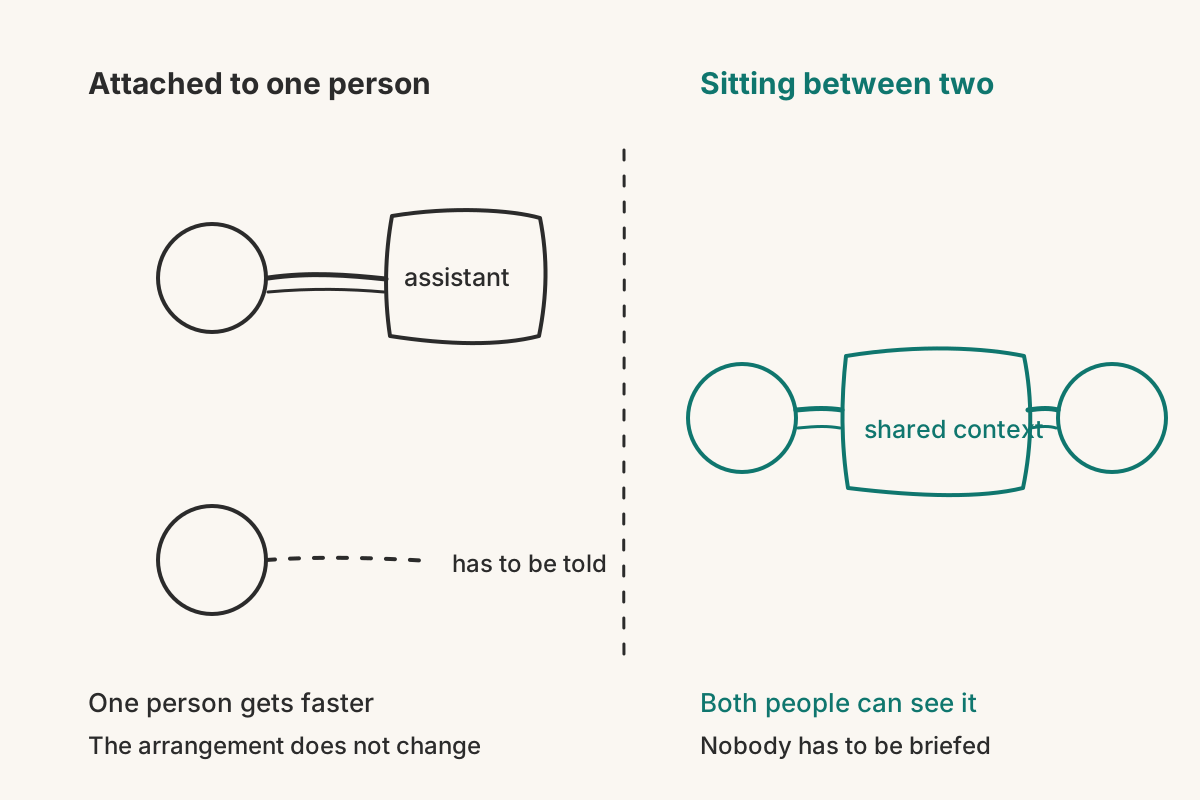
The bottleneck in home management is rarely capturing one more reminder. It is the handoff: turning information into action, giving that action to somebody and letting the other person see that it moved.
Sivella puts the handoff inside the system. Its assistant works with a household record containing tasks, owners, decisions, spending, kitchen context and availability. Every member sees the same answer to "what needs us now?"
Facts about Ohai here were read from ohai.ai on 14 August 2026 and are cited where they appear.
Put the handoff inside the household system

Take a school activity as an example. The form goes to one owner, the supplies purchase to another, and Friday's pickup can be planned against availability. The original information becomes three executable commitments rather than one more item for a coordinator to supervise.
Sivella preserves what those commitments depend on. The purchase can refer to the household budget. The pickup uses free-busy timing. A related decision keeps its rationale, so nobody has to reopen the discussion later.
Make Claude answer from a household record
Claude reaches Sivella through MCP. On Free, four read-only tools and 200 monthly requests let Claude answer from the household's real tasks, budget, decisions and memory. The response is grounded in a record both members can inspect.
Helping Hand unlocks full Claude access, expands the household to five members and retains 14 months of context. Actions requiring confirmation stay visible, so AI assistance remains part of the shared workflow rather than a private conversation.
Sivella carries no advertising on any plan. Its household space is built for the people who share it, without ads competing for attention.
Compare what the household can see and act on
| Sivella | Ohai | |
|---|---|---|
| Free tier | Yes, 2 members | Yes, per its own FAQ |
| Paid entry price | $9/mo (₹599 in India) | From $9.99/mo |
| Primary interface | Shared dashboard and chat | Voice and messaging |
| Calendar detail shared | Full event or free-busy only | Not checked |
| Household context comes from | What members choose to share | Email, calendars and documents |
| Named task ownership | Yes | Not checked |
| Claude workflow | Free includes 4 read-only tools and 200 requests/month | Not checked |
Convert an AI-organised plan into accountable action
Start with the next plan that produces several follow-ups. Break it into named commitments in Sivella, attach the relevant money or timing, and let each person close their own loop. The household sees progress directly.
Repeat that flow for appointments, repairs and weekly logistics. Sivella accumulates an operational memory: what was requested, who took it, what the household decided and what remains unfinished. Claude and every member then work from that same history.
Scale Sivella's AI access as the household grows
Free establishes the shared AI workflow for two people. It retains 45 days of context and gives Claude four read-only MCP tools with 200 requests each month.
Helping Hand costs $9 or ₹599 monthly. It supports five members, keeps 14 months of context and opens full Claude access.
Right Hand costs $19 or ₹999 monthly. It removes the member limit and extends household context to 36 months.
Sivella does not train models on household data. The record exists to help the people inside the household coordinate and act.