Blog · Template
A shared house cleaning schedule with clear owners
A shared house cleaning schedule should name each area, the result that counts as clean, its realistic rhythm, and the person who owns the next turn. Keep routine cleaning separate from occasional deep work, and adjust the schedule when the household has less capacity instead of leaving one person to absorb the difference.
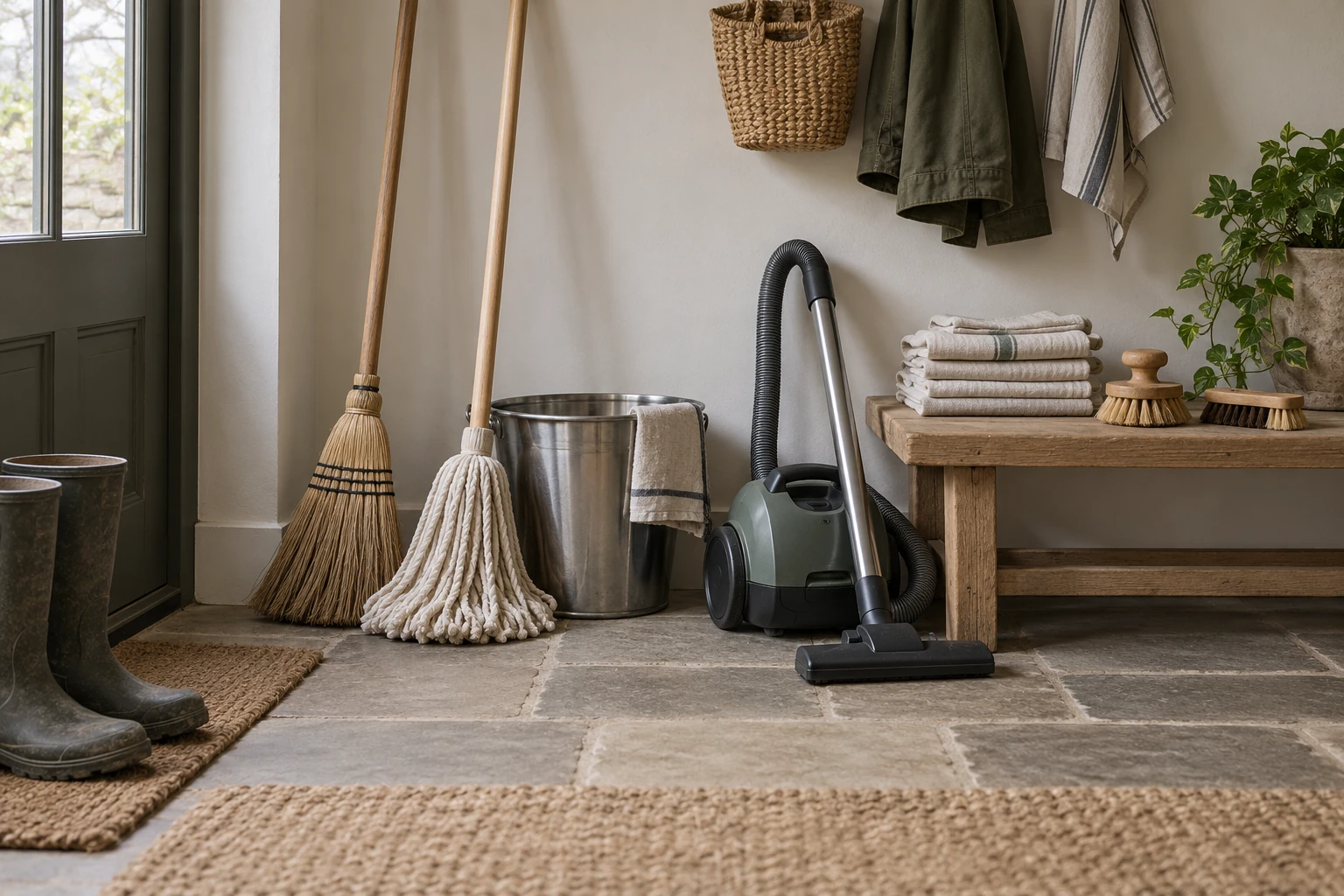
A shared house cleaning schedule should name each area, the result that counts as clean, its realistic rhythm, and the person who owns the next turn. Keep routine cleaning separate from occasional deep work, and adjust the schedule when the household has less capacity instead of leaving one person to absorb the difference.
The schedule is not a verdict on who notices mess first. It is a shared reference for ordinary work that otherwise becomes visible only when it has been missed.
What belongs in a shared house cleaning schedule?
Build the schedule around spaces and observable results. “Bathroom” is a subject. “Clean the sink and toilet, wipe the mirror, and empty the bin” tells another person what finishing the turn means.
Use this copyable structure:
- Area: the room or shared space.
- Finish line: the small set of results that count as done.
- Rhythm: daily, weekly, monthly, or triggered by a real condition.
- Next owner: the person responsible for the coming turn.
- Useful timing: a genuine boundary, such as before guests arrive.
- Outcome: completed, moved, reduced, or deliberately skipped.
Keep routine cleaning apart from deep work. Wiping the hob after cooking and cleaning behind it are not the same job. If both sit on one line, the line either becomes too large to start or quietly means something different to each person.
How should household members divide the cleaning?
Divide the cost of the work, not only the number of rooms. A small bathroom may take more attention than a large hallway. Frequency matters too: a short job repeated every day can outweigh a longer monthly one.
Give the next turn one owner. Sivella tasks carry an owner, so everyone can see who is expected to move a piece of work without making that person the permanent keeper of the room. Ownership can rotate, remain stable by preference, or change when schedules change. The important part is that the current expectation is visible.
Do not hide planning inside “helping.” If one person still decides what needs cleaning, checks the supplies, assigns every turn, and follows up afterward, the physical work may be divided while the coordination is not. Keep the schedule where the household can inspect and update it together.
Which cleaning jobs should recur, and which should stay one-off?
Use a recurring reminder when the job returns on a useful rhythm. A weekly floor clean can recur. A spill, the cupboard emptied during a repair, or preparation for a visitor is a one-off action and should disappear when it is resolved.
Sivella supports recurring rhythms and one-off nudges. Its working loop is capture, clarify, assign, and follow through: capture the need, clarify the finish line, assign the next turn, and keep it visible until the result is recorded. Avoid adding a reminder for a habit that already happens reliably; unnecessary prompts make the real signals harder to see.
Choose rhythms from the home you actually have. If a weekly job is repeatedly moved, change the frequency or reduce its finish line. A schedule should describe a workable household, not preserve an ideal week that nobody lives.
What happens when the household has less capacity?
Make the schedule smaller on purpose. Protect cleaning with an immediate consequence, reduce the finish line for the rest, and move deep work to a real later point. Sivella energy check-ins record capacity as low, steady, or high and shape the workload. The household sees the level and date, while a personal note stays private.
Use Sivella's Today plan for the narrow view of what needs attention and the next step. The whole rota does not need to occupy every morning. Routine work can wait quietly until its turn matters.
Review the schedule when the same person repeatedly finishes unowned work or reminds everyone else. Usually the problem is a vague result, an unrealistic rhythm, or no visible owner. Repair that line rather than adding urgency to the entire home. The schedule is working when anyone can see what clean means today, who owns the next turn, and what has calmly moved to another day.