Blog · Template
A household supplies restock checklist everyone can use
A household supplies restock checklist should show what is running low, the point for replacing it, and who owns the next purchase. Keep shared staples separate from personal items, add each shortage when it is noticed, and close the action when the supply is back where the household expects to find it.
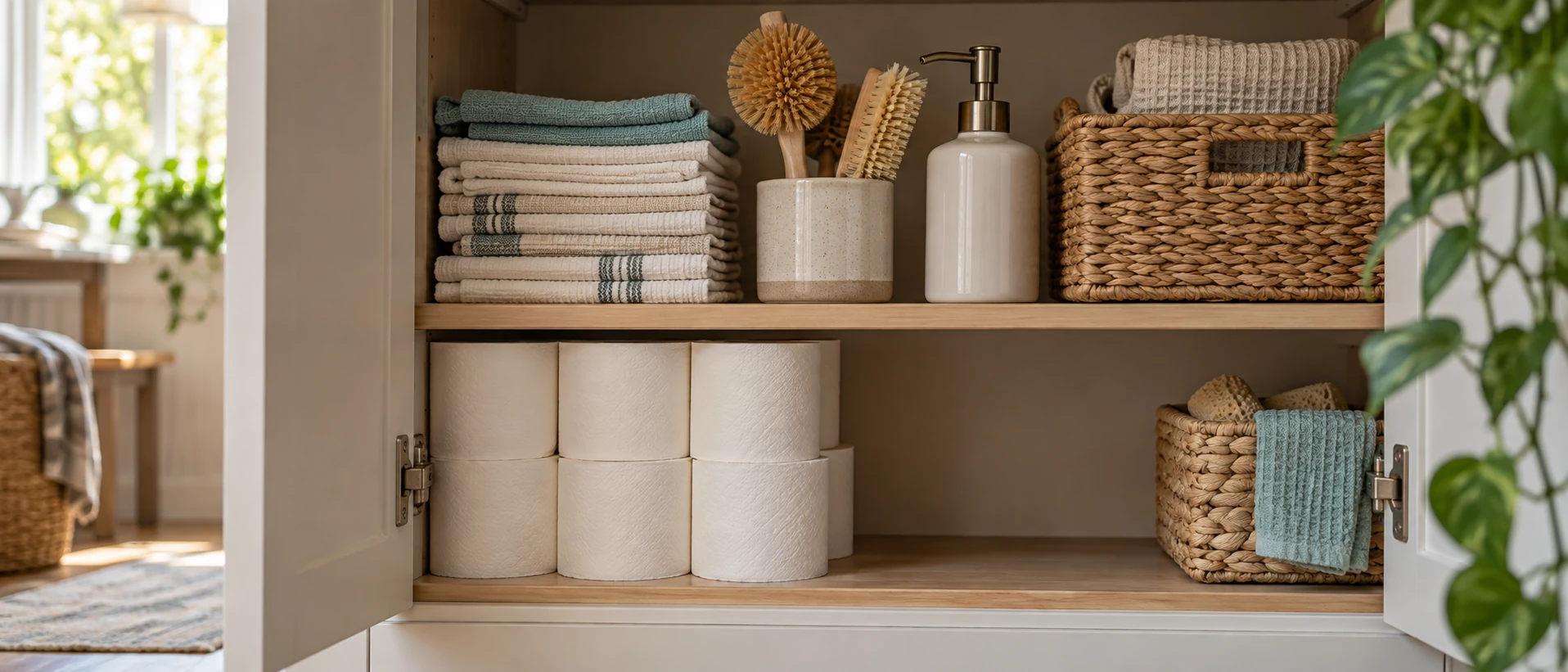
A household supplies restock checklist should show what is running low, the point for replacing it, and who owns the next purchase. Keep shared staples separate from personal items, add each shortage when it is noticed, and close the action when the supply is back where the household expects to find it.
The useful list is not an inventory of everything under every sink. It covers the ordinary supplies several people rely on: paper goods, hand soap, detergent, cleaning cloths, bin liners, batteries, and similar items your home chooses to share. Its job is to turn “we are nearly out” into one visible next step before that fact returns as a last-minute errand.
Which items belong on a shared household supplies checklist?
Start with supplies whose absence affects more than one person. A shared roll of bin liners belongs. A personal shampoo usually does not. When an item sits between those categories, agree whether the household replaces it together before putting it on the list.
Group the list by where somebody notices the shortage, not by an elaborate store layout. A short structure might use kitchen, bathroom, laundry, cleaning cupboard, and general household. In Sivella, the kitchen area holds pantry information and a shopping list, so food and kitchen staples can stay with the meal-planning context that already affects them. Other household supplies can become clear tasks or reminders.
Do not begin with a universal essentials list. Walk through the supplies your household actually uses and add only the repeat items. A shorter list that people recognize is easier to maintain than a complete catalogue somebody has to interpret.
What should each restock entry record?
Give every shared supply the same small set of fields:
- Item: the name everyone at home uses.
- Storage place: where the replacement should return.
- Restock point: the visible condition that means “buy now.”
- Amount: enough to reach the next ordinary shop or review.
- Owner: the person handling this purchase.
- Useful timing: the real boundary, if there is one.
- Outcome: bought, unavailable, substituted, or deliberately deferred.
Make the restock point observable. “Running low” asks each person to make a different judgment. “One unopened pack left” or “the refill bottle has been opened” gives the household a shared trigger without requiring a detailed count.
Sivella tasks carry an owner. Keep that ownership narrow: the person replacing detergent this time does not become the permanent manager of every utility-cupboard supply. The next purchase can move to someone else when schedules or capacity change.
When should a supply use a reminder instead of a shopping action?
Use a shopping action when somebody has already noticed a real shortage. Use a recurring reminder only when a review genuinely belongs on a stable rhythm. A monthly cupboard check may be useful for supplies that run down predictably; an extra reminder for every individual roll and bottle will usually create more maintenance than clarity.
Sivella supports recurring rhythms and one-off nudges. A recurring reminder can bring the cupboard review back. A one-off nudge can cover a delayed replacement or an item that was unavailable during the last shop. Once the item is obtained or intentionally deferred, close that temporary action instead of letting it return without a reason.
This follows Sivella's capture, clarify, assign, and follow-through loop. Capture the shortage when it is seen. Clarify the restock point and amount. Assign the next purchase. Keep it visible until the supply is back in place or the household has made another choice.
How does the checklist stop becoming one person's private list?
Put the noticing and the buying in the same shared context. The person who opens the last pack should be able to record that fact without also accepting the errand. The person heading to a shop should be able to see the current shortages without asking for a second list.
Use Sivella's Today plan for supplies whose timing has arrived. The whole restock catalogue does not need to sit in front of everyone each morning; Today is the single view of what needs attention and the next step. Later purchases can remain quiet until they matter.
Review the system when something still runs out unexpectedly. Usually the item was missing, the trigger was vague, or the action had no owner. Repair that one gap rather than adding urgency to the entire list. The checklist is working when anybody at home can notice a shortage, leave a clear signal, and trust that the next purchase no longer lives only in their head.