Blog · Template
A home repair coordination checklist for the whole household
A home repair coordination checklist should keep the problem, next step, options, budget constraint, appointment window, owner, and follow-through together. Sivella connects tasks, calendar availability, budget context, and decisions in one shared household record, so the repair can move without one person carrying every call, quote, and update.
A home repair coordination checklist should keep the problem, next step, options, budget constraint, appointment window, owner, and follow-through together. Sivella connects tasks, calendar availability, budget context, and decisions in one shared household record, so the repair can move without one person carrying every call, quote, and update.
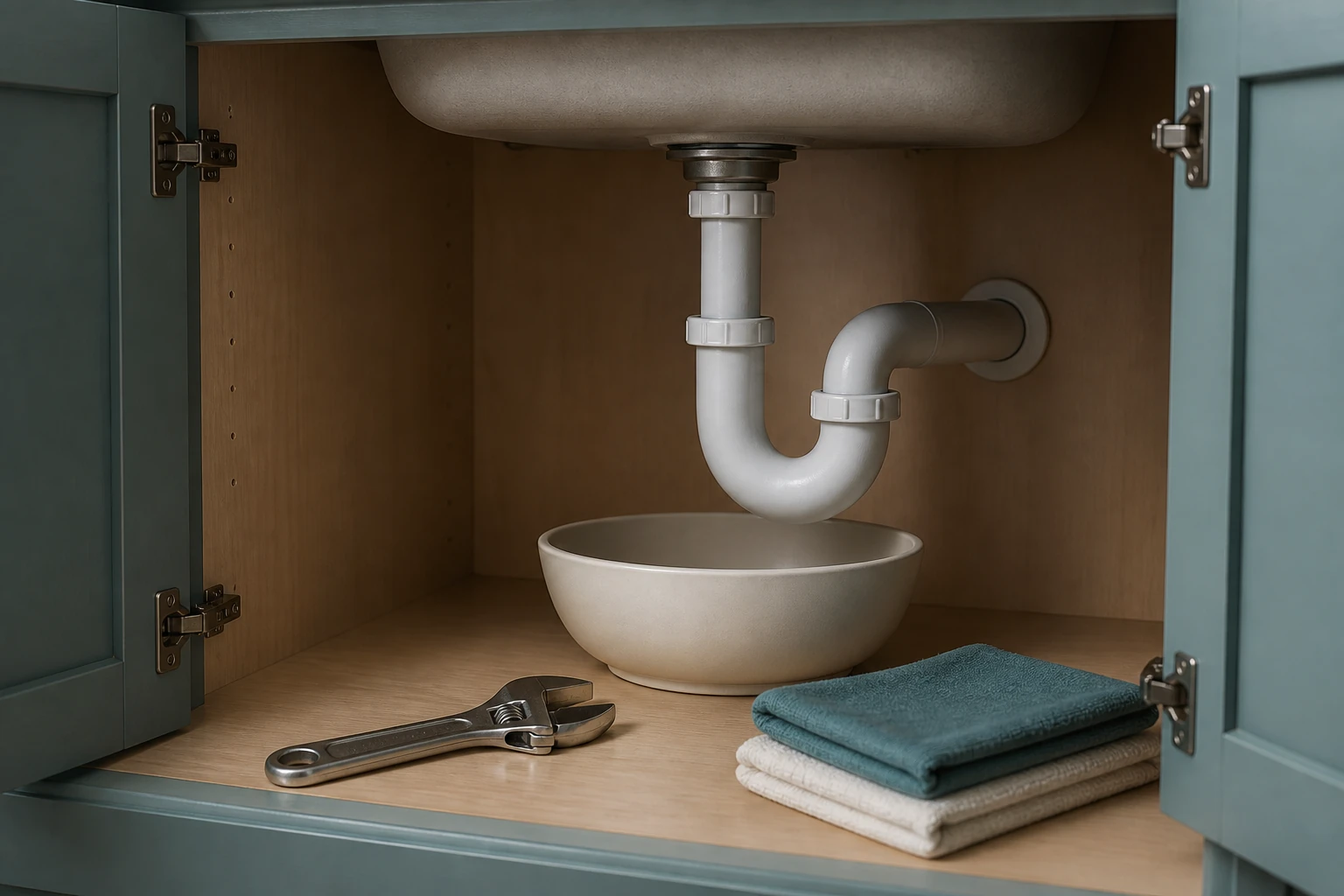
A dripping pipe can produce five separate jobs before anybody touches a wrench: describe the fault, contact a repairer, consider the estimate, arrange access, and check the result. Use the fields below as one repair card that anybody at home can read.
What do you write down before the first call?
Describe evidence, not a guessed diagnosis. “Water appears beneath the left basin after the tap runs for a minute” is useful. “Plumbing broken” is not. The first version helps a repairer ask a sensible follow-up and helps another resident notice whether the symptom changed.
Record these details:
- Location: room, appliance, fitting, or affected area.
- Observation: what can be seen, heard, smelled, or felt.
- First noticed: date and approximate time.
- Pattern: constant, intermittent, or linked to a particular use.
- Immediate response: what has already been switched off, moved, or contained.
- Caller: the person making the first enquiry.
- Check-back: when to chase if no reply arrives.
The caller is responsible for that enquiry, not every later stage. Sivella tasks carry an owner, and a one-off reminder can cover the check-back without appointing a permanent repair manager.
What should be settled before you accept an estimate?
Put the estimate beside the consequence of accepting it. Note the amount, what it covers, whether another visit is expected, and when an answer is required.
Some estimates open a choice. Is a repair sensible, or is replacement now a real alternative? Is one quote enough, or would another change the answer? Does paying this month displace spending already planned? Sivella's decision area keeps options, constraints, and ownership together. Its budget ledger tracks goals, upcoming spending, and tradeoffs.
For this stage, complete four fields:
- Routes still available: the genuine choices, including waiting when it is safe to wait.
- Limit: the date, dimensions, availability, or spending boundary that removes a route.
- Answer needed from: the person or people who must settle the choice.
- Action after the answer: booking, requesting another estimate, buying a part, or deliberately pausing.
Who can let the repairer in?
Start with possible windows, then choose the resident handling access. Sivella shares free-or-busy availability from Google, Outlook, iCloud, and CalDAV without exposing event details. The household can find overlap without asking anybody to reveal why a block is unavailable.
Add the visit details to the repair card:
- confirmed date and arrival window;
- person who booked it;
- person expected to be present;
- room or fitting the repairer needs to reach;
- agreed spending boundary or unresolved question;
- fallback action if the repairer cancels or cannot finish.
The booker and the person at home need not be the same. The person opening the door should be able to see the symptom and the agreed scope.
How does the repair pass between household members?
Move the card through four short verbs: capture, clarify, assign, follow through. Capture the new fact. Clarify what it changes. Assign the resulting action. Follow through until there is a result or an intentional pause.
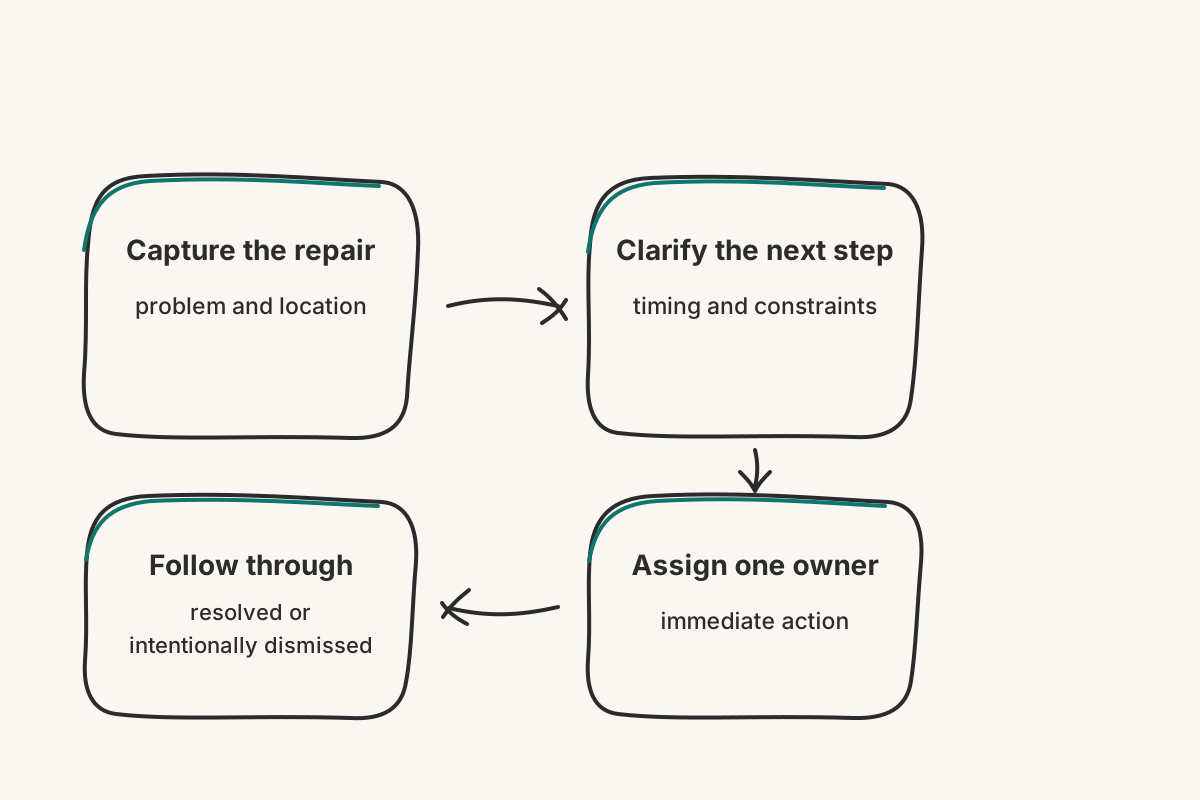
Run that loop after each event. A callback creates an estimate to consider; approval creates a visit to book; the visit creates either a finished repair or another action. Sivella's Today plan shows what needs attention and the next step.
What do you check before closing the repair?
Test the original symptom under the conditions in which it appeared. Then write one outcome: resolved, further work booked, monitoring until a named date, or intentionally paused. “Visit completed” is not enough if the leak, noise, fault, or damage remains.
If another stage is needed, identify its caller, check-back, and appointment requirement before closing the previous action. If the work is finished, remove stale reminders. Sivella household memory is inspectable and editable, so an outdated detail can be corrected or removed.
The card can close when another resident can read it and answer: what was wrong, what was done, what remains, and who—if anyone—acts next. That is a repaired handoff as well as a repaired home.