Blog · Integration
How to approve Claude changes in Sivella
When Claude proposes a household change that needs confirmation, the proposal appears in both Claude and Sivella. Review what will change, then approve it from whichever place you already have open. The shared confirmation keeps a change to tasks, budget, decisions, or memory from taking effect silently.

When Claude proposes a household change that needs confirmation, the proposal appears in both Claude and Sivella. Review what will change, then approve it from whichever place you already have open. The shared confirmation keeps a change to tasks, budget, decisions, or memory from taking effect silently.
This is the point where a conversation becomes shared household context. A request such as changing the owner of a task may begin in Claude, but the result belongs to everyone who relies on the household record. Approval gives the person making the request a clear pause before that record changes.
Where does a proposed Claude change appear?
A change that needs confirmation appears in both places: the Claude conversation where it was proposed and Sivella's own interface. You do not have to return to the place where the request began merely to find the proposal again.
That shared view matters when a household question moves between contexts. You might ask Claude about an open decision while working in a longer conversation, then open Sivella later to see what the household needs today. The proposal remains available from the household side instead of becoming an instruction known only to the person who asked.
Sivella connects to Claude through its MCP connector. Through that connection, Claude can read and change tasks, budget, decisions, and household memory. Changes that need confirmation use the same approval boundary whether you encounter them in Claude or Sivella.
What should you review before approving?
Read the proposal as a change to a shared record, not merely as the last line of a chat. Check the household item, the specific change, and whether the current context still supports it. If the proposal concerns a task, confirm that the owner and immediate action are the ones the household now expects. If it concerns a decision, check that the relevant options, constraints, and ownership have not changed since the conversation began.
Use the same restraint for budget or memory changes. Sivella's budget ledger holds goals, upcoming spending, and tradeoffs. Household memory is inspectable and editable. Approve the smallest accurate change rather than treating a broad conversational summary as a replacement for several separate facts.
If the proposal is unclear, do not approve it merely to keep the conversation moving. Return to the underlying household item, clarify the intended result, and let the next proposal state that result plainly.
Should you approve in Claude or in Sivella?
Choose the place where you can review the proposal with the right context. If the surrounding Claude conversation contains the reasoning you need, approve there. If you need to look at the current household record first, review and approve from Sivella. Both routes act on the same proposed change.
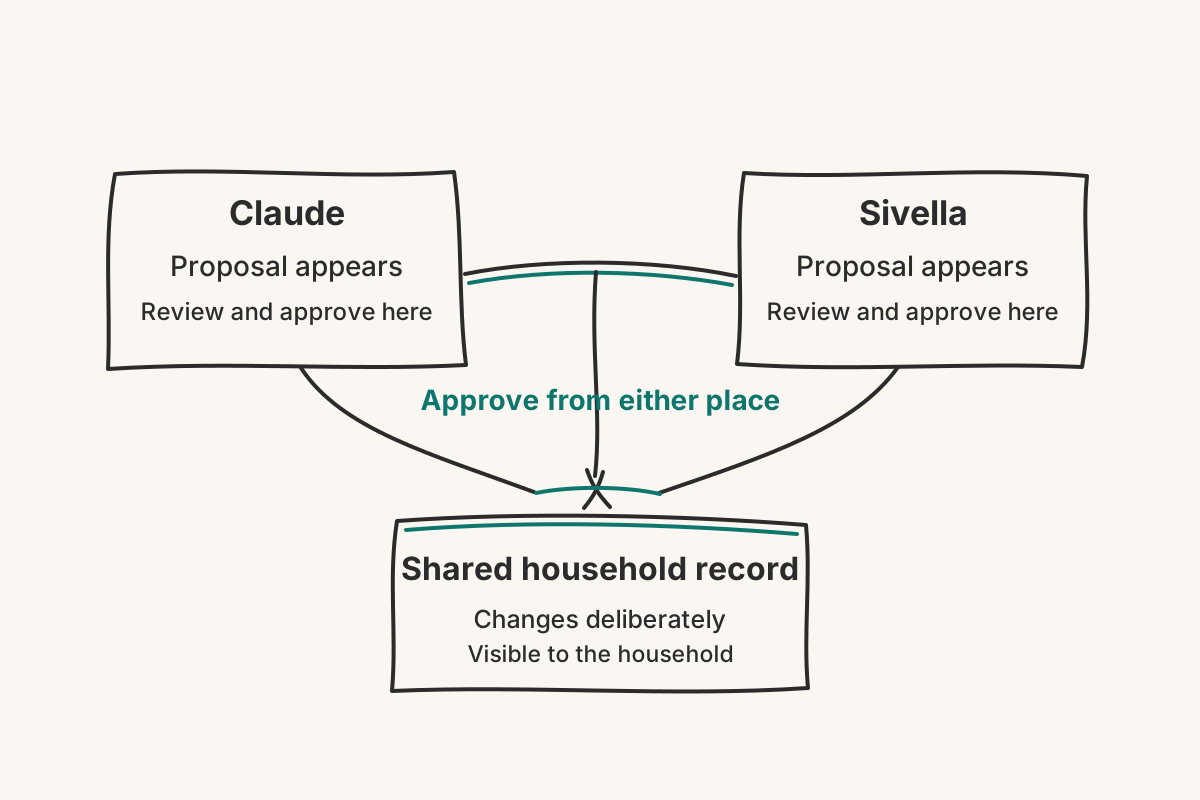
The choice is about visibility, not speed. Approval should be easy to reach without becoming automatic. A person already in Claude can stay with the conversation; another household member looking at Sivella can use the interface they already trust for the home's shared state.
What should you check after approval?
Return to the Sivella surface the proposal affected and read the result as another household member would. Tasks should still have a clear owner and next action. Decisions should keep their options, constraints, and ownership together. A budget change should still make the relevant goal, upcoming spend, or tradeoff understandable. A memory change should leave an accurate fact the household can inspect and edit later.
This final check is not a second approval. It is a check that the shared context still makes sense without the private conversation that produced it. Sivella's working loop is capture, clarify, assign, and follow through. Claude can help move through that loop, while confirmation keeps the moment of change visible.
The useful outcome is quiet: the proposal is reviewed once, the household record changes deliberately, and nobody has to ask whether an assistant acted somewhere they could not see.